
Vendor Management · For vendors
Where Vendors Actually Find Open Applications
Find markets, festivals, and outdoor events that are taking vendor applications using maps, returning-vendor invites, city calendars, and organizer lists.
Stop Refreshing Random Facebook Groups First
Introduction
Open vendor spots are not hiding in one official national list. They sit on organizer sites, marketplace maps, city calendars, returning-vendor emails, and yes, a few Facebook groups. Vendors who only check one of those channels miss the events that actually match their radius.
This guide covers where applications really show up in 2026, how to tell a live "accepting vendors" listing from a stale flyer, and how to build a weekly search habit that does not eat your production time.
Why Finding Events Is a Process, Not a Google Search
A single search for "craft fair near me" returns last year's PDF, a ticket page with no vendor tab, and three events already full. The useful signal is whether applications are open right now, what they cost, and whether the event is the type you already sell at.
National directories exist and they help, but they do not cover every neighborhood pop-up, church bazaar, or city night market. Those still live on parks-and-rec calendars, chamber newsletters, and organizer Instagrams. Your job is to cover the layers that match your business, not to monitor every platform on earth.
Returning vendors also skip the public hunt. Organizers who keep history invite last year's strong booths before the form opens to everyone. Getting on that list is a find strategy as much as a sales strategy.
Key Places Applications Surface
Event Maps and Marketplaces
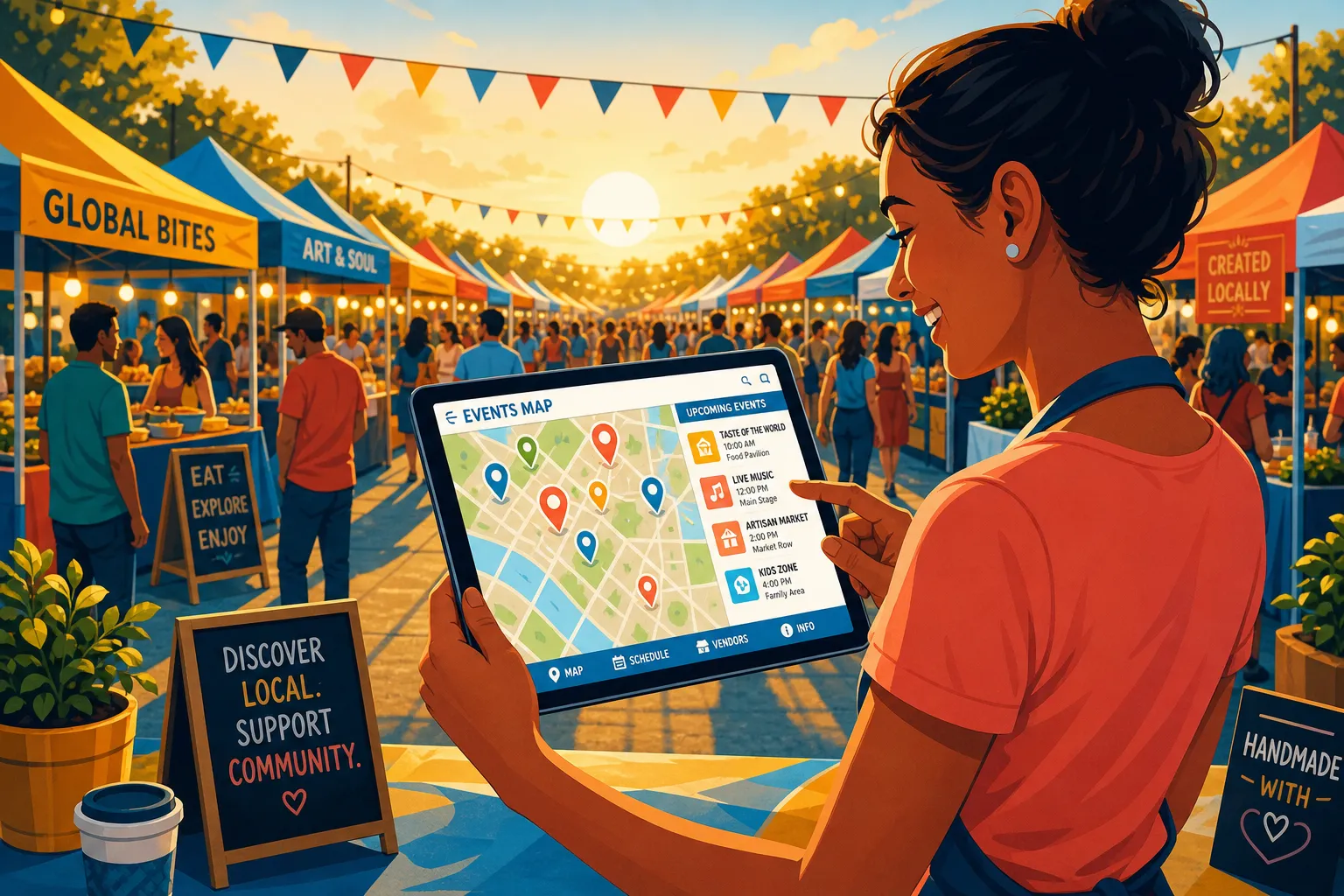
Map-first listings let you filter by date, type, and whether applications are open, then open the form from the event page. That is faster than collecting URLs in a notes app. FestKit's public events map is built for this: dates, type, and apply state live on the map so you are not navigating away to change a filter.
Use the map for festivals, recurring markets, and outdoor events in your drive time. Save the ones that pass your fit filter instead of applying to every pin.
Organizer Sites and Returning-Vendor Mail
Once you know who runs the good events in your region, watch their site and the inbox you used last year. Early access and "we have your booth from last season" messages are how veteran vendors fill summer without refreshing groups. Reply on time. A slow "yes" is how that invite moves to the waitlist.
City, Parks, and Chamber Calendars
Municipal special-events calendars, downtown alliances, and tourism boards list festivals that never pay to sit in a vendor directory. Search the city name plus "vendor application" and the year. Bookmark the parks special-events page for any metro you work often.
Groups and Word of Mouth, Used Last
Vendor Facebook groups and group chats still surface last-minute cancellations and school fairs. Treat them as a supplement. Screenshot the listing, then verify fee, date, and the actual application URL on the organizer's site before you pay anyone in the comments.
6 Steps to Build a Weekly Find Habit
- Set the search box. Radius, event types you actually sell at, and a fee ceiling for unproven shows. Do not browse "everything."
- Check the map first. Filter for open applications in the next 60 to 90 days. Opening day of the hunt should not be a blank Google tab.
- Scan two local calendars. City plus one neighborhood or chamber source. Fifteen minutes, once a week, beats a monthly panic.
- Work the organizers you already know. If you had a strong day last year, ask when returning applications open. Do it before the public deadline.
- Verify before you apply. Confirm the form is for this year, the fee matches the page, and the deadline has not passed. Dead links and recycled flyers are common.
- Track what you submitted. Date, event, fee, and status. Duplicate applications and missed follow-ups cost spots. Keep this next to the break-even sheet so you are not hunting events you cannot cover.
Questions Vendors Ask While They Search
- Is this listing for 2026, or did a blog scrape last summer?
- Does "accepting vendors" mean the form is open, or that they hope someone emails?
- If I apply through a third party, does the organizer actually see it?
- Why is a well-known event still listed as open a week before the date? (Sometimes it is a dead zone they cannot fill. That is data.)
- Can I apply from my phone on load-out Friday, or does this form need COI uploads at a desk?
Tips for Success
Apply Early Only After the Event Passes the Filter
Rolling admissions fill food and jewelry first. Speed helps after fit, not instead of it. A fast application to a saturated category is still a no.
Use One Inbox for Organizer Mail
COIs, load-in PDFs, and returning invites get lost in a personal inbox full of shipping alerts. A dedicated address on every application is a small operational edge.
Be Findable While You Search
Organizers also hunt. A public profile with booth photos, categories, and the cities you travel saves them a cold email and puts you on next year's invite list. That is the other half of "finding" events.
Cover the Map, Then Go Make Product
You do not need fifteen tools. You need a map of open applications, two local calendars, the organizers who already know you, and a rule that Facebook is last. Spend the time you save on inventory.
Browse events taking applications on FestKit, then publish your vendor profile so the next search runs in both directions.
Vending this season? Publish your profile on FestKit so organizers can find you, then browse events that are taking applications. See vendor profiles.